How to Install Bathroom Floor Tile?
- Sinotiles
- 2026-06-16

A bathroom floor faces daily moisture, foot traffic, and constant temperature changes. Many homeowners begin a tiling project without proper planning and later discover uneven tiles, cracked grout, or water-related problems.
To install bathroom floor tile, prepare the subfloor carefully, select the correct adhesive, plan the tile layout, use spacers for consistent joints, set the tiles evenly, and allow sufficient curing time before grouting and use. Proper preparation is the key to a durable and professional-looking floor.
Bathroom floor tiling is not the most difficult renovation project, but every step matters. A beautiful tile floor depends on what happens before the first tile is laid. Understanding preparation, adhesive selection, installation timing, and tile spacing can help avoid costly mistakes and create a floor that lasts for many years.
What Preparation Is Needed Before Tiling?
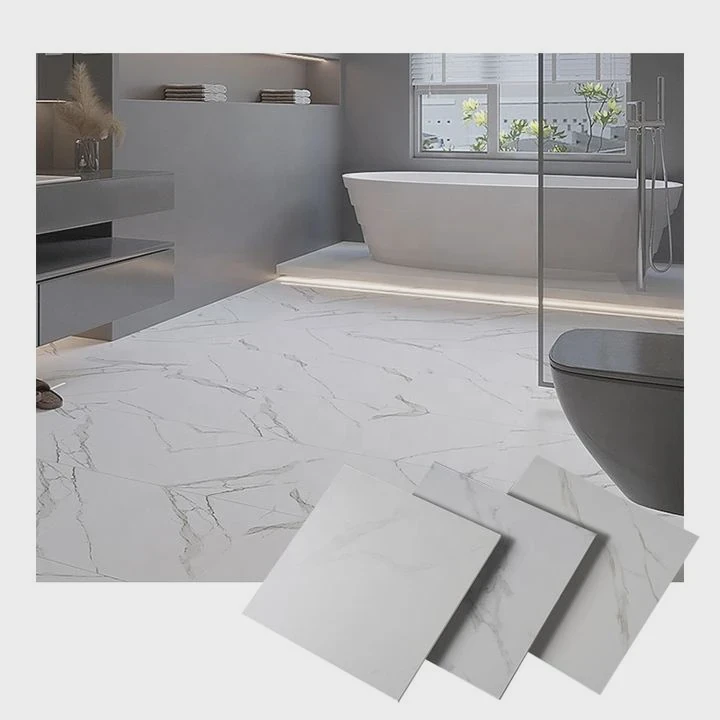
Many bathroom tile failures occur long before the adhesive is mixed. An unstable or poorly prepared subfloor can cause loose tiles, cracked grout lines, and uneven surfaces.
Before tiling, the bathroom floor must be clean, level, dry, structurally sound, and properly measured. Any damage, moisture issues, or uneven areas should be corrected before tile installation begins.
Preparation creates the foundation for the entire project. Even premium tiles cannot compensate for a poor substrate.
Inspect the Existing Floor
The first step is evaluating the current floor condition.
I always begin by checking for:
- Cracks
- Water damage
- Soft spots
- Loose flooring
- Structural movement
Bathrooms often experience hidden moisture problems that should be addressed before tiling starts.
Remove Existing Flooring
In many renovation projects, old flooring must be removed.
Common materials include:
- Vinyl flooring
- Laminate flooring
- Old ceramic tiles
- Sheet flooring
The goal is to expose a stable substrate suitable for new tile installation.
Check Floor Level
Tiles require a reasonably flat surface.
An uneven floor may lead to:
- Lippage between tiles
- Adhesive inconsistencies
- Cracked tiles
- Water pooling
A long level or straightedge helps identify high and low spots.
Common Floor Preparation Checklist
| Preparation Task | Purpose |
|---|---|
| Remove old flooring | Expose substrate |
| Repair damage | Improve stability |
| Check level | Prevent uneven tiles |
| Clean surface | Improve adhesion |
| Verify dryness | Prevent moisture issues |
Completing these steps greatly improves installation quality.
Repair Any Damage
Subfloor repairs should never be skipped.
Common repairs include:
- Filling cracks
- Replacing damaged plywood
- Tightening loose panels
- Repairing water damage
A strong substrate supports long-term tile performance.
Install Underlayment if Needed
Many bathroom floors benefit from a tile underlayment.
Popular options include:
- Cement backer board
- Tile backer panels
- Uncoupling membranes
These products help create a stable installation surface.
Plan the Tile Layout
Before opening the adhesive, dry-lay several rows of tiles.
This helps determine:
- Starting point
- Cut locations
- Tile balance
- Visual symmetry
A centered layout often produces the most attractive result.
Measure the Room Carefully
Accurate measurements reduce waste and simplify purchasing.
Important measurements include:
- Room length
- Room width
- Obstacle locations
- Toilet flange position
- Doorway transitions
Extra tiles should always be ordered to account for cuts and future repairs.
Clean Thoroughly Before Installation
Dust and debris can interfere with adhesive performance.
The floor should be:
- Swept
- Vacuumed
- Free from oil
- Free from loose particles
A clean substrate provides the best bonding conditions.
Preparation may feel time-consuming, but it often determines whether the floor performs well for years or develops problems shortly after installation.
Which Adhesive Suits Bathroom Floor Tiles?
Choosing the wrong adhesive can cause tile movement, poor bonding, and expensive repairs. Bathrooms require adhesives that can withstand moisture, temperature changes, and daily use.
Modified thinset mortar is the most common adhesive for bathroom floor tiles because it provides strong bonding, moisture resistance, durability, and compatibility with ceramic and porcelain tiles.
The adhesive acts as the connection between the tile and the substrate. Selecting the correct product is essential.
Why Thinset Is Preferred
Thinset mortar has become the industry standard for floor tile installations.
Benefits include:
- Strong bonding strength
- Moisture resistance
- Long-term durability
- Compatibility with multiple tile types
Most professional installers rely on thinset for bathroom floors.
Types of Tile Adhesives
Several adhesive options are available.
| Adhesive Type | Bathroom Floor Suitability |
|---|---|
| Modified Thinset | Excellent |
| Unmodified Thinset | Good |
| Premixed Mastic | Limited |
| Epoxy Adhesive | Excellent |
| Construction Adhesive | Not Recommended |
Each product serves different installation needs.
Modified Thinset Mortar
Modified thinset contains polymer additives that improve performance.
Advantages include:
- Increased flexibility
- Better adhesion
- Improved moisture resistance
- Stronger bond strength
This makes it ideal for bathroom environments.
Ceramic Tile Applications
Ceramic floor tiles work well with standard modified thinset products.
Common ceramic sizes include:
- 300x300 mm
- 300x600 mm
- 600x600 mm
These tiles typically require straightforward installation methods.
Porcelain Tile Applications
Porcelain is denser than ceramic.
Because of its low water absorption rate, porcelain often benefits from high-performance modified thinset designed specifically for dense materials.
Large Format Tile Considerations
Large format tiles have become increasingly popular in modern bathrooms.
Common sizes include:
- 600x1200 mm
- 750x1500 mm
- 900x1800 mm
These tiles often require large-format tile mortar to ensure full support beneath the tile.
Proper Mortar Mixing Matters
Even the best adhesive can fail if mixed incorrectly.
Common mixing mistakes include:
- Excess water
- Insufficient mixing
- Incorrect curing time
- Improper batch sizes
Manufacturer instructions should always be followed carefully.
Trowel Selection Influences Performance
The trowel controls adhesive coverage.
Different tile sizes require different notch sizes.
Larger tiles generally require:
- More adhesive
- Larger trowel notches
- Better coverage rates
Insufficient coverage may create hollow spots beneath the floor.
Moisture Resistance Is Essential
Bathrooms experience regular exposure to moisture.
Proper adhesive selection helps resist:
- Humidity
- Cleaning water
- Temperature changes
- Daily use
The adhesive should complement the waterproofing strategy of the entire floor system.
A quality thinset mortar, combined with proper installation techniques, creates a strong and reliable foundation for long-lasting bathroom tile floors.
How Long Does Tile Installation Take?
One of the most common questions homeowners ask is how quickly a bathroom floor can be completed. The answer depends on room size, tile type, preparation requirements, and curing times.
Most bathroom floor tile installations take between two and five days, including preparation, tile setting, curing, grouting, and final cleanup. Larger or more complex projects may require additional time.
Many people focus only on the tile-setting process.
In reality, several stages contribute to the overall schedule.
Stage 1: Surface Preparation
Preparation often consumes the first day.
Tasks may include:
- Removing old flooring
- Repairing the subfloor
- Installing underlayment
- Cleaning the surface
Preparation quality directly affects project success.
Stage 2: Layout Planning
Layout planning may require several hours.
This stage includes:
- Establishing center lines
- Dry-fitting tiles
- Determining cut locations
- Checking room symmetry
Careful planning helps avoid visual problems later.
Stage 3: Tile Installation
The tile-setting process varies according to room size.
Typical bathroom sizes:
| Bathroom Size | Estimated Tile Installation Time |
|---|---|
| Small | 4-6 hours |
| Medium | 1 day |
| Large | 1-2 days |
Complex layouts naturally increase labor requirements.
Large Format Tile Installation
Larger tiles may appear faster to install because fewer pieces are required.
However, they often require:
- More precise leveling
- Additional adhesive coverage
- Careful alignment
This can offset some time savings.
Stage 4: Mortar Curing
Once the tiles are installed, the adhesive requires curing time.
Most manufacturers recommend:
- 24 hours minimum
- 48 hours for heavier applications
Walking on freshly installed tiles too early may disturb alignment.
Stage 5: Grouting
Grouting typically occurs after adhesive curing.
The process includes:
- Mixing grout
- Filling joints
- Cleaning tile surfaces
- Final polishing
Many standard bathrooms can be grouted within several hours.
Stage 6: Final Cure Period
Grout also requires curing time.
Depending on the product, full curing may take:
- 24 hours
- 48 hours
- Several days
Water exposure should be limited during this period.
Factors Affecting Project Duration
Several variables influence the schedule.
Common factors include:
Room Complexity
Bathrooms often contain:
- Toilets
- Vanities
- Floor drains
- Corners
- Pipe penetrations
Each obstacle requires additional cutting and fitting.
Tile Size
Smaller mosaic tiles typically require more installation time.
Large-format tiles often require greater precision.
Installer Experience
Experienced installers generally work faster while maintaining quality.
DIY projects often progress more slowly because homeowners are learning throughout the process.
Weather and Humidity
Environmental conditions influence curing times.
High humidity may slow drying, while moderate temperatures typically support optimal curing.
Although many homeowners expect tile installation to take only a few hours, a professional-quality bathroom floor usually requires several days from preparation to final completion.
Are Spacers Necessary for Even Tile Layout?
Some installers attempt to place tiles by eye. While this may seem faster initially, inconsistent grout lines often become obvious once the floor is complete.
Tile spacers are highly recommended because they create consistent grout joints, improve alignment, enhance appearance, and help achieve a professional-looking tile layout.
Spacers are small, inexpensive tools that significantly improve installation accuracy.
What Tile Spacers Do
Tile spacers maintain consistent gaps between adjacent tiles.
These gaps allow room for:
- Grout
- Expansion
- Minor size variations
Without spacers, maintaining uniform joints becomes difficult.
Benefits of Using Spacers
The advantages are substantial.
Spacers help:
- Improve visual consistency
- Reduce alignment errors
- Simplify installation
- Support professional results
Even experienced installers frequently use them.
Common Spacer Sizes
Different projects require different joint widths.
| Spacer Size | Common Application |
|---|---|
| 1 mm | Rectified tiles |
| 2 mm | Modern porcelain |
| 3 mm | Standard ceramic |
| 5 mm | Rustic designs |
The chosen joint width affects the final appearance.
Why Consistent Grout Lines Matter
Uneven grout joints draw attention immediately.
Even minor variations can make a new floor appear poorly installed.
Uniform spacing creates:
- Better symmetry
- Cleaner lines
- Improved aesthetics
- Professional results
Large Format Tile Alignment
Large-format tiles often require additional leveling systems.
These systems combine:
- Spacers
- Clips
- Wedges
Together they help reduce lippage and maintain consistent alignment.
Accommodating Tile Variations
Not all tiles are perfectly identical.
Manufacturing tolerances can create slight size differences.
Spacers help compensate for these variations while maintaining an organized layout.
Installation Workflow with Spacers
A typical process involves:
- Spread adhesive.
- Place the first tile.
- Insert spacers.
- Position adjacent tiles.
- Check alignment.
- Continue row by row.
This method promotes consistency across the entire floor.
When Spacers Become Even More Important
Spacers provide significant value in:
- Large bathrooms
- Long tile runs
- Rectangular tile layouts
- Large-format installations
The larger the installation area, the more visible spacing errors become.
Small Investment, Major Improvement
Tile spacers are among the least expensive tools used during installation.
Yet they contribute significantly to:
- Layout accuracy
- Installation speed
- Finished appearance
- Customer satisfaction
For most bathroom tile projects, spacers should be considered essential rather than optional.
Conclusion
Installing bathroom floor tile successfully begins with proper preparation, continues with selecting the correct adhesive, requires patience for curing times, and benefits greatly from the use of tile spacers. When each step is completed carefully, the result is a durable, attractive, and long-lasting bathroom floor that performs well for many years.