What Size Trowel for 24x48 Tile?
- Sinotiles
- 2026-06-26

Installing large format tiles can be challenging, especially when selecting the correct trowel size. Many installers focus on tile design and adhesive quality but overlook the tool that directly affects coverage and bond strength.
For most 24x48-inch tiles, a 1⁄2” x 1⁄2” square-notch trowel is the minimum recommendation, while a 3⁄4” x 1⁄2” or larger notch may be required depending on tile thickness, substrate flatness, and coverage requirements. Proper coverage is more important than simply following a standard trowel size.
Large format porcelain tiles have become increasingly popular in residential and commercial projects. Their sleek appearance creates fewer grout lines and a more spacious look. However, larger tiles demand greater attention during installation. Choosing the right trowel helps ensure proper mortar coverage, prevents hollow spots, and improves long-term durability.
Which Notch Size Suits Large Format Tiles?
Many tile failures begin with insufficient mortar coverage. Large format tiles require more adhesive beneath the surface than smaller tiles because their size increases the risk of voids and uneven support.
Most 24x48 tiles perform best with a 1⁄2” x 1⁄2” square-notch trowel or larger. The exact notch size should be confirmed through coverage testing rather than relying solely on tile dimensions.
Large format tile installations require careful planning. The goal is not simply spreading mortar. The goal is achieving the required coverage under the tile after it is pressed into place.
Why Large Tiles Need More Mortar
A 24x48 tile covers a large surface area. Even minor variations in the floor or wall can create gaps beneath the tile.
These gaps may lead to:
- Cracked tiles
- Loose tiles
- Hollow sounds
- Reduced load capacity
- Moisture-related issues
A larger notch creates deeper mortar ridges that collapse under pressure and fill more space beneath the tile.
Common Trowel Sizes for Large Format Tiles
| Trowel Size | Typical Application |
|---|---|
| 1⁄4” x 3⁄8” | Small wall tiles |
| 1⁄4” x 1⁄2” | Medium floor tiles |
| 1⁄2” x 1⁄2” | Large format tiles |
| 3⁄4” x 1⁄2” | Very large porcelain panels |
| Euro Slant Notch | High-coverage installations |
For many 24x48 porcelain tiles, installers start with a 1⁄2” x 1⁄2” notch and perform coverage checks.
Coverage Matters More Than Trowel Size
Industry standards focus on mortar coverage rather than a specific trowel dimension.
Recommended coverage levels are generally:
| Installation Area | Minimum Coverage |
|---|---|
| Interior Dry Areas | 80% |
| Wet Areas | 95% |
| Exterior Areas | 95% |
Large format porcelain often targets near-complete coverage.
Back Buttering Is Often Necessary
Many professional installers combine a large-notch trowel with back buttering.
Back buttering involves applying a thin layer of mortar directly to the back of the tile before installation.
Benefits include:
- Improved coverage
- Better bonding
- Reduced voids
- Increased support
For 24x48 tiles, this step is commonly recommended.
Testing Before Full Installation
A simple test can prevent major problems.
After placing a tile:
- Press it firmly into the mortar.
- Lift the tile carefully.
- Inspect the back.
- Measure coverage.
If large uncovered areas remain, a larger notch or different installation technique may be necessary.
How Does Tile Thickness Affect Trowel Choice?
Tile size often receives most of the attention during installation planning. However, tile thickness can be equally important when selecting a trowel.
Thicker tiles generally require more mortar beneath them, which often means using a larger notch trowel to achieve proper support and coverage.
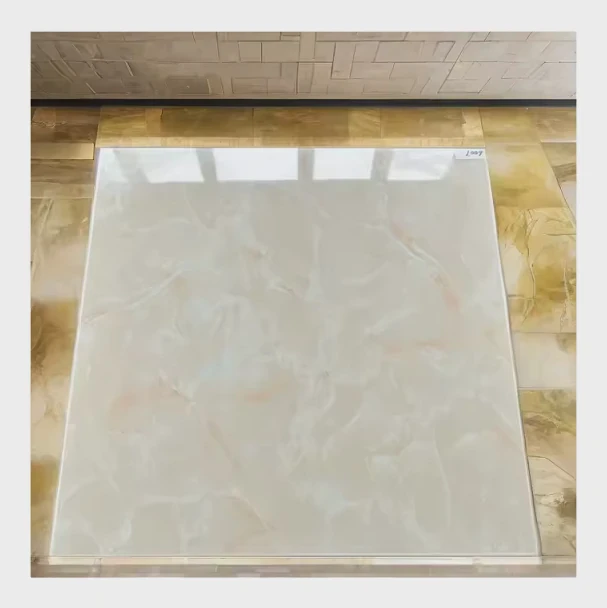
Not all 24x48 tiles are manufactured the same way. Some residential porcelain products may be relatively thin, while commercial-grade materials can be considerably thicker.
Understanding Tile Thickness Variations
Common thickness ranges include:
| Tile Type | Approximate Thickness |
|---|---|
| Standard Porcelain | 8-10 mm |
| Premium Porcelain | 10-12 mm |
| Heavy-Duty Porcelain | 12-20 mm |
| Porcelain Pavers | 20 mm+ |
As thickness increases, mortar requirements often increase as well.
Why Thickness Changes Installation Needs
Thicker tiles are generally heavier.
Additional weight creates several challenges:
- Greater load on fresh mortar
- Increased need for support
- More potential for uneven settling
A larger notch helps provide sufficient mortar volume.
Floor Flatness Also Plays a Role
Even a thick tile cannot compensate for an uneven substrate.
Large format tile installations often require very flat surfaces.
Industry guidelines commonly recommend:
- No more than 1⁄8 inch variation within 10 feet
- No more than 1⁄16 inch variation within 2 feet
When the floor is less flat, installers may increase notch size to help compensate.
Mortar Bed Thickness After Compression
Many installers misunderstand notch dimensions.
The notch height does not equal the final mortar thickness.
When the tile is pressed into place:
- Ridges collapse
- Air pockets are removed
- Mortar spreads outward
The finished mortar layer is usually much thinner than the original notch.
Typical Trowel Selection by Tile Thickness
| Tile Thickness | Common Starting Trowel |
|---|---|
| 8-10 mm | 1⁄2” x 1⁄2” |
| 10-12 mm | 1⁄2” x 1⁄2” or larger |
| 12-20 mm | 3⁄4” x 1⁄2” |
| 20 mm+ | Project-specific evaluation |
These are starting points rather than fixed rules.
Importance of Manufacturer Guidelines
Every tile manufacturer may have different recommendations.
Factors include:
- Tile weight
- Surface texture
- Back pattern design
- Installation location
Reviewing technical specifications before installation can prevent costly mistakes.
Why Use Larger Notches for Better Coverage?
Many installers hesitate to use larger trowels because they worry about wasting mortar. In reality, insufficient mortar coverage creates far more expensive problems than using slightly more adhesive.
Larger notch trowels provide more mortar volume, helping achieve full coverage beneath large format tiles and reducing the risk of voids, cracks, and bond failure.

Coverage is the foundation of a successful tile installation. Large format tiles demand higher coverage because they distribute loads across wider surfaces.
How Mortar Ridges Work
When mortar is combed with a trowel, ridges form across the substrate.
As the tile is pressed and moved slightly:
- Ridges collapse
- Mortar spreads evenly
- Air escapes
- Bond strength increases
If the ridges are too small, full coverage may never be achieved.
Common Problems Caused by Insufficient Mortar
Voids beneath tiles can create weak points.
These weak points may lead to:
- Tile cracking
- Edge breakage
- Hollow sounds
- Water intrusion
- Loose tiles
Larger notches help minimize these risks.
Comparing Coverage Performance
| Trowel Type | Mortar Volume |
|---|---|
| Small Notch | Low |
| Medium Notch | Moderate |
| Large Notch | High |
| Euro Notch | Very High |
More mortar volume generally improves the ability to fill surface irregularities.
Benefits of Larger Notches
Improved Bond Strength
More contact between mortar and tile increases adhesion.
Better Load Distribution
Heavy furniture and foot traffic create concentrated loads.
Full coverage spreads these loads more evenly.
Reduced Hollow Areas
Large format tiles often reveal hollow spots through sound testing.
Proper notch size significantly reduces this issue.
Relationship Between Coverage and Longevity
A floor may look perfect immediately after installation even if coverage is poor.
Problems often appear later through:
- Cracking
- Debonding
- Grout damage
- Tile movement
Proper coverage helps prevent these long-term issues.
Combining Larger Notches with Proper Technique
The best results come from combining:
- Correct notch size
- Proper mortar selection
- Directional troweling
- Back buttering
- Coverage testing
No single factor guarantees success. Each contributes to overall performance.
What Mistakes Occur with Wrong Trowel Sizes?
The wrong trowel size can undermine an entire installation. Even premium tiles and high-quality mortar cannot compensate for poor mortar coverage caused by an unsuitable trowel.
Using the wrong trowel size can lead to inadequate coverage, tile lippage, hollow spots, cracking, bond failure, and costly repairs.

Many installation failures trace back to improper trowel selection. Understanding these risks helps avoid expensive callbacks and replacements.
Mistake 1: Using a Trowel That Is Too Small
This is the most common problem with large format tiles.
Small notches often create:
- Insufficient mortar volume
- Large voids
- Weak bonding areas
The installation may initially appear acceptable but fail later.
Mistake 2: Ignoring Coverage Testing
Some installers assume a recommended trowel automatically provides proper coverage.
Actual results depend on:
- Tile flatness
- Substrate condition
- Mortar consistency
- Installation technique
Coverage should always be verified.
Mistake 3: Excessive Lippage
Lippage occurs when adjacent tiles are not level.
Contributing factors include:
- Uneven mortar support
- Inconsistent coverage
- Improper trowel selection
Large format tiles are particularly sensitive to this issue.
Mistake 4: Hollow Sounding Tiles
Tiles with insufficient support often sound hollow when tapped.
Causes of Hollow Areas
| Cause | Result |
|---|---|
| Small Notch | Reduced coverage |
| Poor Mortar Transfer | Air pockets |
| Uneven Floor | Unsupported sections |
| No Back Buttering | Coverage gaps |
These hollow areas may become future failure points.
Mistake 5: Mortar Waste from Oversized Trowels
Although larger notches improve coverage, excessive notch sizes can create new challenges.
Potential issues include:
- Excess mortar squeeze-out
- Increased cleanup
- Higher material consumption
- Longer installation times
The goal is adequate coverage, not maximum mortar thickness.
Mistake 6: Uneven Mortar Collapse
Mortar ridges should collapse consistently.
Poor trowel selection can cause:
- Air entrapment
- Irregular support
- Weak bonding zones
Directional troweling helps improve ridge collapse.
Mistake 7: Premature Tile Failure
The most costly consequence is complete installation failure.
Symptoms may include:
- Loose tiles
- Cracks
- Debonding
- Water infiltration
Repairing these issues often requires removing large sections of flooring.
How Professionals Avoid Trowel Mistakes
Experienced installers follow a simple process:
- Review manufacturer recommendations.
- Evaluate tile size and thickness.
- Check substrate flatness.
- Select a starting trowel.
- Perform coverage tests.
- Adjust if necessary.
This method reduces guesswork and improves installation quality.
Conclusion
For most 24x48 porcelain tiles, a 1⁄2” x 1⁄2” square-notch trowel is the common starting point, but coverage testing should always determine the final choice. Tile thickness, substrate flatness, and installation conditions all influence trowel selection. Achieving proper mortar coverage is the key to preventing hollow spots, cracks, and long-term tile failures.
- Pre: How to Tile Shower Floor?
- Next: Sorry!