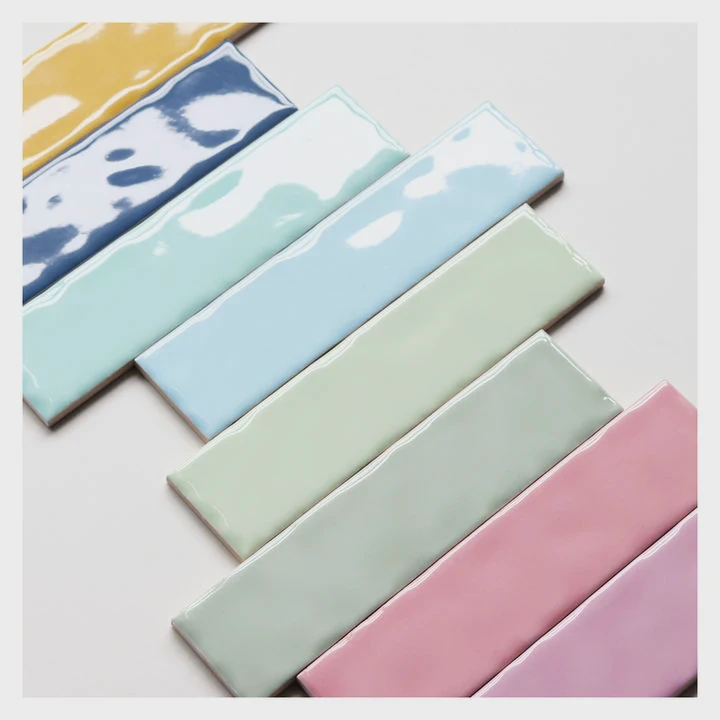
What Size Trowel for Subway Tile?
- Sinotiles
- 2026-04-09

Many people install subway tiles and face issues like poor bonding or uneven surfaces. Often, the real problem is choosing the wrong trowel size.
The best trowel size for subway tile is usually a 1⁄4” x 1⁄4” square notch or 1⁄4” x 3⁄16” V-notch, depending on tile size and surface. The correct notch ensures proper adhesive coverage and strong bonding.
Trowel size may seem like a small detail, but it directly affects how well tiles stick and how smooth the final surface looks.
Why does tile size affect trowel choice?
Many installers think one trowel works for all tiles. This assumption often leads to weak adhesion or uneven tile surfaces.
Tile size affects trowel choice because larger tiles need more adhesive for full coverage, while smaller tiles require less to avoid excess buildup and uneven placement.

Tile size changes how adhesive spreads and supports the tile. A mismatch between tile size and trowel notch can create hidden problems.
How tile size impacts adhesive needs
Small tiles
Subway tiles are usually smaller and lighter. They do not need thick adhesive layers. Too much adhesive can push tiles out of alignment.
Large tiles
Large-format tiles need more support. A larger notch helps provide full coverage and prevents hollow spots.
Adhesive coverage requirements
Proper coverage is critical for durability. Industry standards often recommend:
- 80% coverage for dry areas
- 95% coverage for wet areas like showers
Trowel size vs tile size
| Tile Size | Recommended Trowel | Adhesive Thickness |
|---|---|---|
| Small (subway) | 1⁄4” x 3⁄16” V-notch | Thin layer |
| Medium | 1⁄4” x 1⁄4” square | Moderate |
| Large | 1⁄2” x 1⁄2” square | Thick layer |
Key insight
Using a large trowel on small tiles causes excess adhesive. Using a small trowel on large tiles leads to weak bonding.
Choosing the right size balances coverage and control.
Which notch size suits subway tile installation?
Many people are unsure which notch shape and size to use. This confusion can lead to poor results.
For subway tiles, a 1⁄4” x 1⁄4” square notch or 1⁄4” x 3⁄16” V-notch trowel is ideal, depending on tile thickness and wall flatness.
Subway tiles are typically rectangular and installed on walls. This affects the ideal trowel choice.
Common notch types
Square notch
- Provides more adhesive
- Better for slightly uneven surfaces
V-notch
- Applies thinner adhesive layer
- Easier to control for small tiles
Choosing between notch types
Use square notch when:
- Tiles are thicker
- Surface is not perfectly flat
- Stronger bonding is needed
Use V-notch when:
- Tiles are thin
- Surface is smooth
- Precision is important
Notch size comparison
| Notch Type | Size | Best Use |
|---|---|---|
| V-notch | 1⁄4” x 3⁄16” | Thin subway tiles |
| Square notch | 1⁄4” x 1⁄4” | Standard subway tiles |
Practical recommendation
In most wall installations, a 1⁄4” x 1⁄4” square notch offers a good balance. It provides enough adhesive without causing excessive buildup.
For very thin tiles or backsplash projects, a V-notch may give better control.
How do you ensure proper adhesive coverage?
Many tile failures happen because of poor adhesive coverage. This issue is often hidden until tiles start to loosen.
Proper adhesive coverage is ensured by using the right trowel, applying consistent pressure, holding the correct angle, and checking coverage during installation.
Coverage is not just about spreading adhesive. It is about how the tile contacts the surface.
Steps to achieve full coverage
1. Hold the trowel at the right angle
A 45-degree angle creates consistent ridges. This helps distribute adhesive evenly.
2. Use straight lines
Spread adhesive in straight lines, not circles. This allows air to escape when tiles are pressed.
3. Press and move the tile
After placing the tile, press and slide it slightly. This collapses ridges and improves bonding.
4. Check coverage
Remove a tile occasionally to inspect the back. Ensure adhesive covers most of the surface.
Coverage checklist
| Action | Purpose | Result |
|---|---|---|
| Correct angle | Even ridges | Better bonding |
| Straight lines | Air release | Full contact |
| Tile movement | Ridge collapse | Strong adhesion |
| Regular checks | Quality control | Consistent results |
Common mistakes
- Holding trowel too flat
- Using circular adhesive patterns
- Not pressing tiles firmly
- Skipping coverage checks
Real-world impact
Poor coverage creates hollow spots. These spots can lead to cracks or loose tiles over time.
Taking time to check coverage improves durability and reduces future repairs.
Can larger trowels cause uneven tile surfaces?
Some installers believe bigger trowels always improve bonding. This is not always true, especially for small tiles like subway tiles.
Larger trowels can cause uneven tile surfaces by applying too much adhesive, which makes tiles difficult to level and increases the risk of lippage.
Too much adhesive creates more problems than it solves. Control is more important than quantity.
How large trowels affect installation
Excess adhesive buildup
Too much adhesive pushes tiles out of position. This creates uneven surfaces.
Increased lippage
Lippage happens when tile edges are not aligned. Thick adhesive makes it harder to keep tiles level.
Longer curing time
Thicker adhesive layers take more time to dry. This can delay project progress.
When large trowels are appropriate
Large trowels are useful for:
- Large-format tiles
- Uneven substrates
- Heavy tiles
They are not ideal for small subway tiles.
Comparison of effects
| Trowel Size | Adhesive Amount | Surface Result |
|---|---|---|
| Small notch | Controlled | Smooth surface |
| Large notch | Excessive | Uneven surface |
Practical advice
Using the correct trowel size improves both efficiency and quality. For subway tiles, smaller notches offer better control.
Final insight
Precision matters more than volume. A properly sized trowel ensures flat, aligned, and durable tile surfaces.
Conclusion
Choosing the right trowel size for subway tiles ensures proper adhesive coverage, smooth surfaces, and long-lasting results. Small adjustments in tool selection can greatly improve installation quality and reduce future issues.